

-
Certificates


Select a certification to see the certification bodies that offer it
-
Quality Management
-
Environmental Management
-
Occupational Health and Safety
-
Energy Management
-
Information Security and Data Protection
-
IT Service Management and Business Continuity
-
Anti-corruption and Compliance
-
Artificial Intelligence and Technological Innovation
-
Food Safety
-
Transport and logistics
-
Automotive
-
Aerospace & Defense
-
Medical Products and Healthcare
-
Construction
-
Carbon Footprint and Sustainable Development
-
Energy and Fuels
-
Cosmetics
-
Business and Professional Services
-
- How It Works
- Certification Guide
- PL
- EN

-
Certificates
Select a certification to see the certification bodies that offer it
-
Quality Management
-
Environmental Management
-
Occupational Health and Safety
-
Energy Management
-
Information Security and Data Protection
-
IT Service Management and Business Continuity
-
Anti-corruption and Compliance
-
Artificial Intelligence and Technological Innovation
-
Food Safety
-
Transport and logistics
-
Automotive
-
Aerospace & Defense
-
Medical Products and Healthcare
-
Construction
-
Carbon Footprint and Sustainable Development
-
Energy and Fuels
-
Cosmetics
-
Business and Professional Services
-
- How It Works
- Certification Guide
-
EN
ISO Certification 26 Nov 2024
How to Properly Use the ISO Name and Logo?
Learn how to correctly use the ISO name and logo to build trust and credibility while avoiding legal issues. Practical tips and insights for businesses!

ISO is one of the most recognized brands worldwide, associated with quality, standards, and trust. It’s no surprise that many companies want to highlight their achievements related to ISO certification. However, the use of the ISO name and logo is strictly regulated, and non-compliance with the rules can lead to legal consequences. In this article, we explain how to use the ISO name and logo correctly and what to avoid to stay within the rules.
What is ISO, and What Does It Represent?
ISO (International Organization for Standardization) is an organization that develops standards to support economic, technological, and societal growth. ISO does not conduct certifications—this task is carried out by certification bodies. As a result, the ISO name and logo are given special protection to prevent their misuse.
Why Are the ISO Name and Logo Protected?
ISO is a global brand, and its improper use can mislead customers and business partners. To maintain the integrity of the brand, ISO protects its name and logo under international regulations. This applies to both visual marketing materials and domain names.
What Rules Govern the Use of the ISO Name and Logo?
ISO Logo
- The ISO logo is a registered trademark.
- It cannot be modified, copied, or used without written permission from ISO.
- Companies that have achieved ISO certification cannot use the ISO logo in their promotional materials. Instead, they may use the logo provided by the certification body that conducted the certification.
ISO Name
- Phrases such as "certified to ISO 9001:2015" can be used, but only with the full designation of the standard.
- Avoid general statements like "ISO Certified," as they can be misleading.
Domain Names
- The use of the ISO name in domain names is prohibited, such as "www.isodatabase.com" or similar. These addresses may suggest unauthorized affiliation with ISO, which is against the organization’s policies.
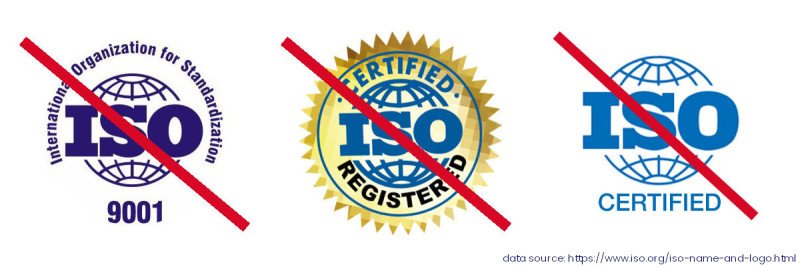 (Source: ISO.org)
What Should You Avoid?
To avoid legal issues, adhere to the following principles:
- Do not use the ISO logo in advertisements or on social media.
- Do not create the impression that your company works directly with ISO or that ISO itself conducted the certification.
- Do not use "ISO" in the names of your products, services, or domain names.
How to Promote ISO Certification Correctly?
- Clearly state the full name of the standard, e.g., ISO 9001:2015.
- If you are certified, use the logo provided by the certification body that issued your certificate.
- In marketing materials, emphasize the benefits of implementing ISO standards rather than focusing solely on the certificate.
Why Follow the Rules?
Complying with the rules regarding the use of the ISO name and logo:
- Protects your business from legal consequences.
- Builds credibility and trust with your clients and business partners.
- Promotes transparency and alignment with international standards.
Conclusion
Using the ISO name and logo is an honor, but it comes with responsibilities. Companies should adhere to the rules governing their use to avoid misunderstandings and legal problems. If you have questions about ISO certification or want to learn more about how to properly promote your achievements, contact us at Certiget. We’re here to help! ✅
📩 Get in touch with an ISO certification expert: Certiget
(Source: ISO.org)
Keywords: ISO name, ISO logo, ISO certification, how to use the ISO logo, ISO 9001 certificate, ISO rules, ISO domain, business certification
Article author
-avatar.webp)
Aleksandra Gorna
Administrative Assistant
Certiget.
Aleksandra is an experienced administrative specialist at Certiget. With a passion for organization and attention to detail, she supports the company’s daily operations and ensures smooth document flow. Her experience in administration, knowledge of ISO standards, empathy, and interest in psychology help build a positive work environment and effective communication with clients and the team.
Share this article


Recommended from this category