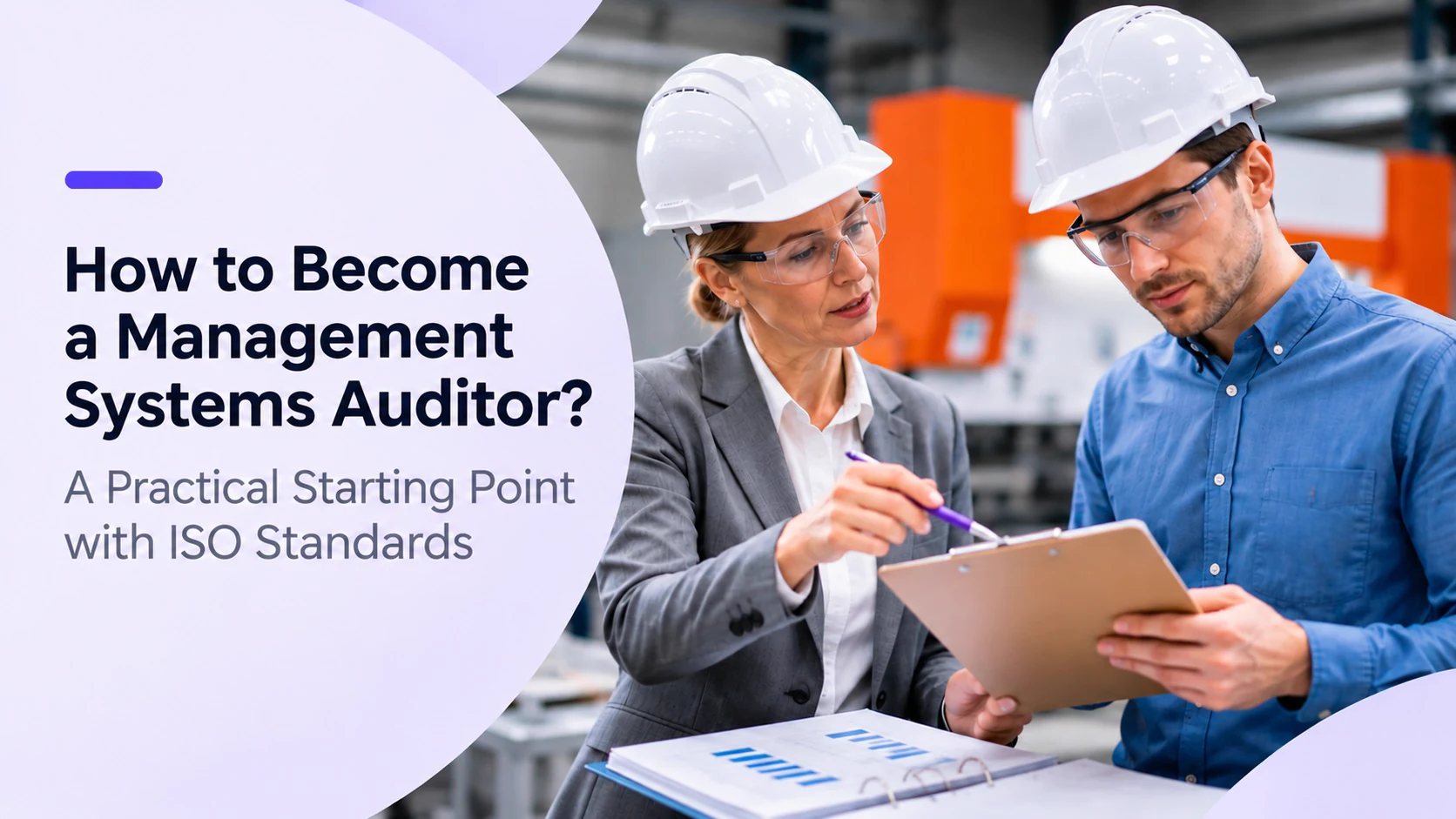
Can anyone become a management systems auditor? Do you need a specialist degree, training or a certificate? You can start working towards internal auditing without first gaining a formal qualification. What matters is having the right skills, understanding the area you will audit and being able to assess it objectively.
This guide explains what management systems auditors do, what is expected of them and how to get started.
What is a management systems auditor?
A management systems auditor is someone competent to conduct audits: systematic, independent and documented assessments against defined criteria.
The auditor gathers and evaluates evidence to determine how well an organisation meets the applicable requirements.
Auditors may specialise in different management systems, including:
- ISO 9001 – quality management
- ISO 14001 – environmental management
- ISO/IEC 27001 – information security management
- ISO 45001 – occupational health and safety management
- ISO 22000 – food safety management
People often say ‘ISO auditor’. The auditor assesses an organisation’s management system against specific criteria, which may include the requirements of a relevant ISO standard. The standard and the International Organization for Standardization (ISO) are outside the scope of that assessment.
Can anyone become a management systems auditor?
Internal auditing is open to people from many professional backgrounds. Each audit calls for competence that matches its scope.
Management system standards generally do not prescribe a particular degree or auditor certificate for internal audits. Specific requirements may still apply.
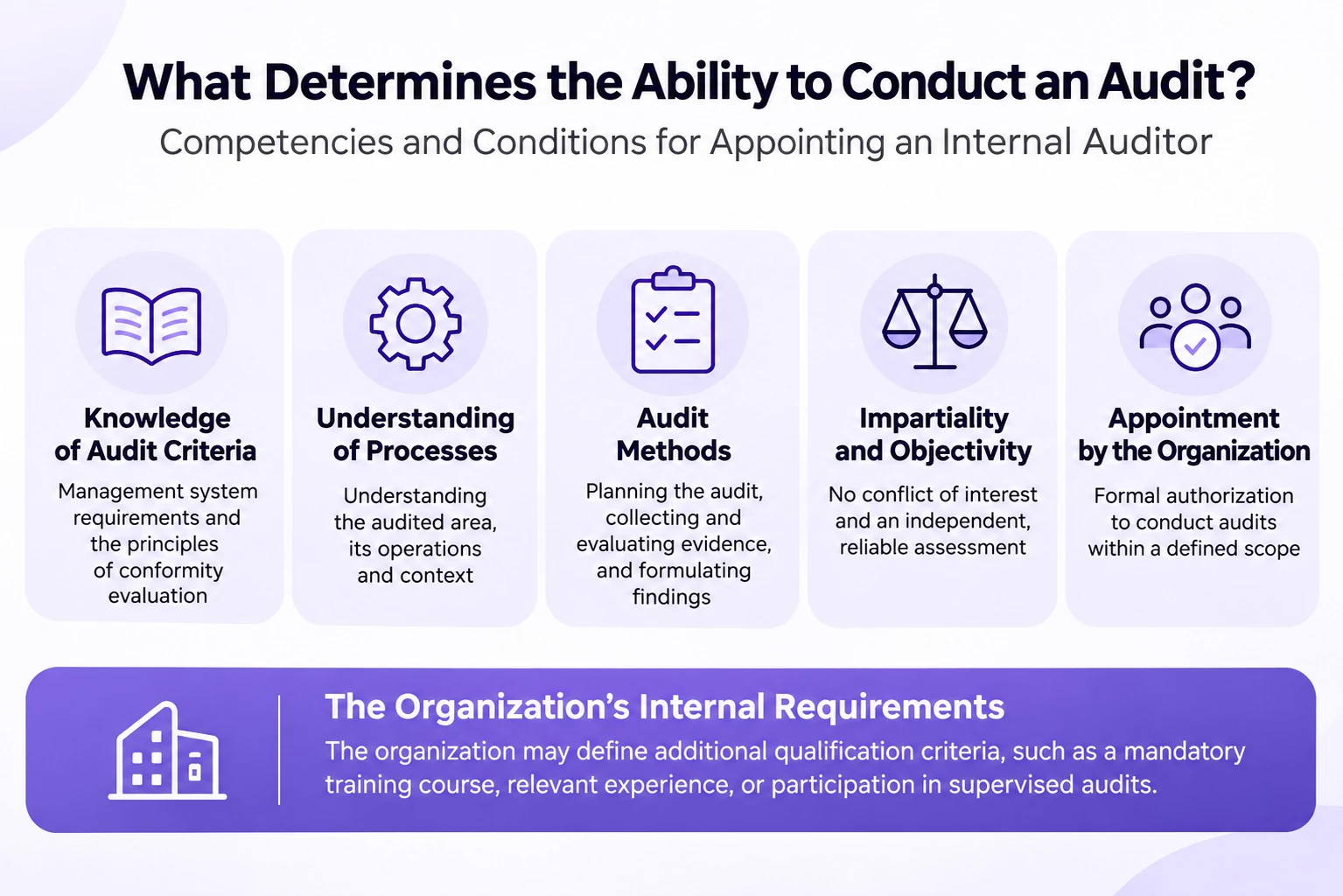
The person appointed to conduct an audit must know the audit criteria, understand the processes under review, be able to apply audit methods and maintain objectivity and impartiality.
The organisation’s own rules also matter. An organisation may require its auditors to complete training, have relevant experience or take part in supervised audits. Someone with the right knowledge and skills may still need to meet these additional requirements.
For example, an experienced production worker may be able to audit selected production processes but may need further preparation to audit information security against ISO/IEC 27001.
The organisation is responsible for appointing competent auditors, applying its own requirements and ensuring that the audit is objective and impartial.
How to become a management systems auditor in four steps
There are several routes into auditing. These four steps can help you prepare for the role.
1. Choose an area of specialisation
Start with a management system that fits your professional experience and interests.
Quality professionals often begin with ISO 9001. IT specialists may build their skills in ISO/IEC 27001, while environmental professionals may focus on ISO 14001.
Understanding the industry and how organisations work is an important part of preparing to audit.
2. Learn the requirements and audit methods
An auditor needs to understand the relevant standard and how its requirements apply in the organisation.
You also need to know how to plan an audit, gather evidence, interview people and document findings.
ISO 19011 provides guidance on auditing management systems. It is a reference for anyone developing auditing competence.
3. Consider taking an auditor training course
A course is often a straightforward way to build knowledge and practical skills, even where formal training is optional for internal auditors.
Look for a course that combines theory with exercises, case studies and simulated audit scenarios. Review the syllabus, the tutor’s experience and how well the course fits the role you want.
Browse management systems training in the Certiget catalogue
4. Gain practical experience
Auditing competence develops through practice. A good starting point is to join an internal audit as an observer or a member of the audit team.
You can see how an audit is conducted and learn to ask questions, assess evidence and formulate findings. As you gain experience, you can take on more responsibility and work towards conducting audits independently.
What is the difference between an internal auditor and a lead auditor?
The two terms describe different aspects of audit work.
An internal auditor conducts audits on behalf of the organisation to assess its management system.
A lead auditor directs the audit team and coordinates the audit. The role can apply to internal and external audits.
Completing a lead auditor course does not automatically qualify you to conduct certification audits for a certification body. Choose training that suits your intended role, existing skills and the types of audit you plan to conduct. For help choosing a course, see our comparison of internal and lead auditor roles and training.
Does a training certificate qualify you to conduct audits?
A training certificate records completion of a particular programme and, depending on the provider, may also confirm that you passed an assessment. Competence must be demonstrated for the management system and scope you will audit.
For internal audits, the organisation should assess your competence and check that you meet its qualification requirements. For certification audits, the certification body sets the applicable criteria and is responsible for assessing and qualifying its audit personnel.
Our guide to personnel certification under ISO/IEC 17024 explains how competence can be assessed independently.
Where should you start?
Start with the area you know best. Learn the requirements of the relevant standard, familiarise yourself with auditing principles and see what opportunities your organisation offers to gain experience.
If you want structured learning or practical preparation, consider an internal auditor course.
A competent auditor can interpret requirements in context, gather objective evidence and draw conclusions supported by that evidence.
Find a suitable training course
In the Certiget catalogue, you can compare management systems courses from different providers, including their programmes, dates, delivery formats and prices.